
Building the foundations
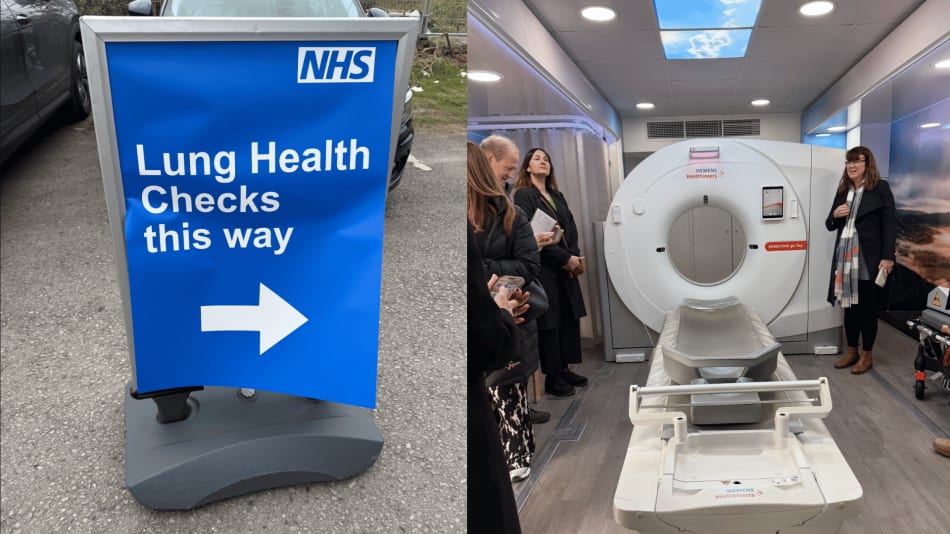
Lung cancer remains Scotland’s leading cause of cancer death, with around two-thirds of cases diagnosed at a late stage, when treatment options become significantly more limited.
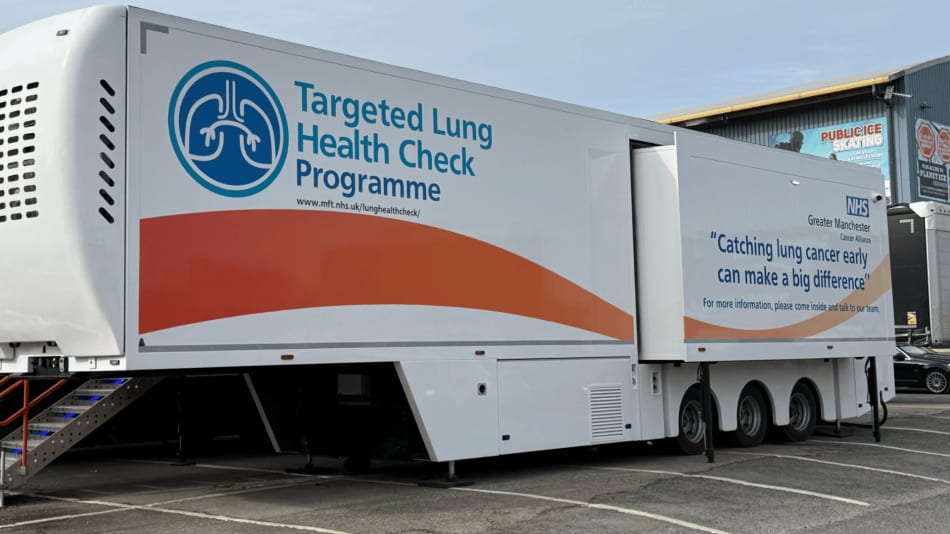
The ambition behind Scotland’s first national Targeted Lung Cancer Screening programme is to identify people at greatest risk earlier, when treatment has the greatest opportunity to improve outcomes.
This presents a significant challenge – to create sufficient confidence to begin procurement for a service that was still evolving.
Within an eight-week discovery, our multidisciplinary team worked alongside clinicians, Public Health Scotland, Scottish Government policy teams, operational managers, architects and administrators to develop a shared understanding of the future service. Together we conducted more than 35 stakeholder interviews, mapped participant and clinical pathways, defined over 250 functional and non-functional requirements, and developed a Technology Vision to describe the long-term direction and design principles for the future screening service.
This level of discovery reflected the scale and governance requirements of a national screening programme. It would not be proportionate for every transformation initiative, but for a programme of this significance it created the evidence needed to support procurement with confidence.
The most value came from giving programme leaders a transparent chain of reasoning, linking research, stakeholder engagement, and service design to the decisions they would ultimately need to defend.
Discovery should reduce uncertainty before procurement
Discovery is often treated as the phase where organisations simply gather requirements, but in complex healthcare transformation its purpose is broader than that.
The role of discovery is to reduce uncertainty to the point where programme leaders can make informed, defensible decisions before procurement begins.
During this discovery, many of the programme’s most significant discussions had very little to do with technology.
Instead, stakeholders explored questions such as:
- How might emerging technologies, including AI-assisted reporting, support future service capacity if radiology demand increases?
- How should capabilities be sequenced while wider diagnostic and treatment pathways continue to evolve?
- How should accessibility, operational readiness and clinical safety influence delivery priorities?
These were governance decisions that NHS Scotland needed to consider before entering the market.
From prioritisation exercise to decision framework
For a programme of this complexity, a conventional MoSCoW exercise was not sufficient. Programme leaders needed to understand the evidence supporting each recommendation and the risks associated with different implementation choices.
To support that, we developed a prioritisation framework combining MoSCoW aligned to NHS Scotland’s Integrated Risk Management Approach (IRMA), with Now-Next-Later sequencing.
Every prioritisation decision remained connected to the evidence that had informed it:
- Research findings
- Clinical engagement
- Operational analysis
- Policy considerations
- Service design
Rather than simply categorising requirements as Must, Should or Could, the framework enabled programme leaders to understand:
- Recommendation rationale
- Supporting evidence
- Unvalidated assumptions
- Accepted risks
That switched prioritisation from a backlog exercise to a transparent governance process.
To support broader strategic decision-making, we also mapped prioritisation criteria against the United Nations Sustainable Development Goals. This ensured discussions considered wider societal outcomes and health inequalities alongside clinical, operational and technical considerations.
Creating a shared vision before detailed design
Alongside the prioritisation framework, we developed a Technology Vision that provided stakeholders with a shared understanding of the future service before procurement or detailed solution design began.
Rather than prescribing technologies, the vision described the capabilities the future service would need to provide across the participant journey. This gave clinicians, policy teams, architects and programme leaders a common reference point for future decisions.
As procurement progresses and implementation choices evolve, stakeholders can assess proposals against a shared understanding of the outcomes the programme was seeking to achieve, instead of individual system preferences.
The Technology Vision also helped ensure that requirements and future technology decisions remained aligned around long-term programme objectives over immediate delivery pressures.
Discovery designed for procurement
The final discovery report was structured around the participant and clinical pathway. Each recommendation linked directly back to evidence, giving procurement a transparent record of the programme’s reasoning, allowing future suppliers to understand the context behind key decisions rather than reconstructing it themselves.
From evidence to confident procurement
The programme can now enter procurement with a clear chain of reasoning linking research, service design, prioritisation and long-term strategic intent.
That means key decisions can be understood, challenged and refined as the programme evolved, not reconstructed from memory.
For organisations commissioning complex services, that distinction matters.
Procurement should not be the point at which programme teams begin revisiting questions that discovery has already explored. It should be the point at which suppliers inherit sufficient context to focus on delivery, while still being able to challenge decisions where new evidence emerges.
Healthcare transformation is a moving target. Technology shifts, clinical evidence evolves, and strong governance demands continuous adaptation. Effective discovery doesn’t pretend to erase this uncertainty – it arms leaders with a traceable decision framework.
A static list of requirements won’t build pre-procurement confidence. Real organisational assurance comes from clarity, knowing not just what was decided, but why.

Defining the structural conditions and success factors required for a national rollout
NHS - Public Services Delivery Scotland × Waracle
Read The Case Study HereAuthors

Related

Article • 29 September 2026
The most valuable use of AI in financial services is far from the customer experience.

Article • 21 September 2026
AI bias is in your models more than you realise

Article • 15 September 2026
How mental health apps can support the unsupported and where AI might fit in – if at all.

Article • 04 September 2026
The Inov8 Consulting brand officially becomes Waracle
