
AI Agent networks should never be a black-box system. Large language models do one thing exceptionally well, they extract structured data from unstructured human input. Using these, engineering teams can build conventional, deterministic software for everything that matters. Validation, process execution, database updates… all triggered by a simple user question or request.
To build agentic systems, you do not necessarily need access to frontier models, complex orchestration frameworks, or expensive third-party tooling. Any engineering team, with a clear understanding of the goal their code is being developed to achieve, can deliver production grade agents.
The only thing the language model needs to do
The capability gains we associate with modern AI systems are often less about the language model itself becoming more capable, and more about the software surrounding the agent improving.
An AI’s real power doesn’t come from some emergent superintelligence. It comes from entity extraction. A large language model is remarkably good at taking unstructured natural language (the way we talk to other humans) and reliably pulling out the key values. Validate this against defined data structures and you have a system that can take a human question, comment, or commands and turn them into clean, predictable JSON.
Take a simple customer interaction:
“Hi SalesBot, can you please process an order for John Tucker. He has just purchased a new bike — item code 776885.”
What the model produces:
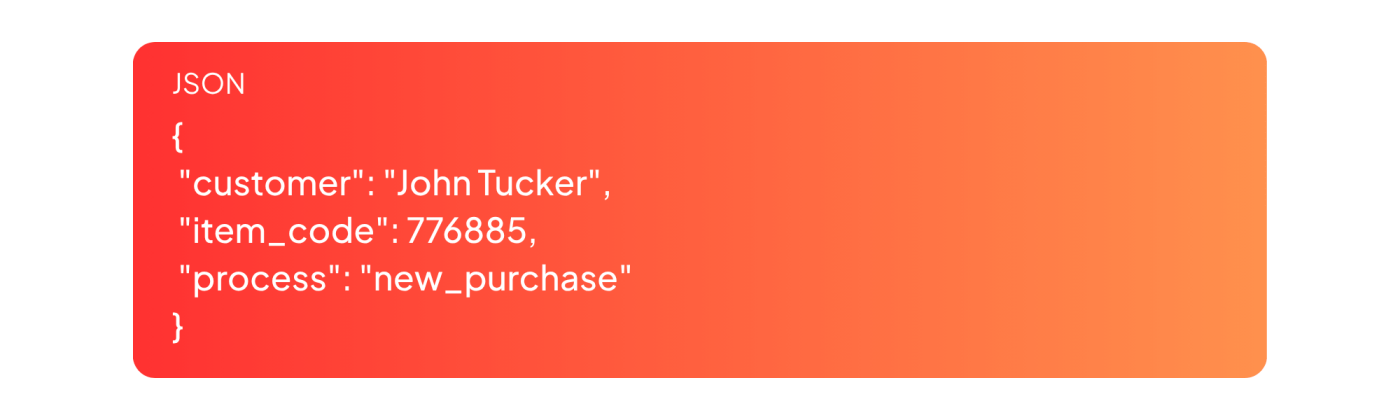
That extraction is genuinely impressive, and it is AI in a meaningful sense. But here is where the AI’s job ends.
Everything after that is merely software
Need to validate the item code against inventory? That’s a database query. Need to kick off a fulfilment process? That’s a workflow trigger. Need to send a confirmation email? That’s a function call. Every one of these downstream steps is deterministic, transparent, and testable. There is no black box. There is no mystery.
The aim of every Agentic System should be to move the workflow away from AI. Language models cannot be trusted to produce repeatable, deterministic outputs. A well-designed agent architecture understands this and accounts for it.
It narrows the model’s role to what it’s genuinely good at; extraction, classification, summarisation. Everything else is code.
Compounding Personas
I will mention there is a different approach to agent systems, the idea of multiple AI personas, each prompted to behave differently, collaborating to solve a problem. One ‘agent’ plans, another researches, another critiques, and so on. The architecture sounds compelling, and it is well-suited to specific use cases such as content generation and creative workflows. For most business operations, though, it introduces complexity that works against you.
From a technical standpoint, each additional model in a chain compounds the unpredictability of the one before it. In regulated industries particularly, that creates real auditability and governance challenges that are difficult to resolve without retreating to simpler patterns.
This makes building reliable systems almost impossible, not to mention a regulatory and auditability nightmare. The better pattern is simpler: let the model do the narrow thing it’s good at, and let well-tested code handle the rest.

It’s much simpler than it’s being sold
Once you see Agents as code, not personas, a lot of the surrounding complexity starts to look unnecessary.
You do not need the latest orchestration libraries or complex third-party frameworks. A team with solid engineering fundamentals can build production-grade agent systems with far less infrastructure than the market currently suggests is required.
(Given the number of serious security vulnerabilities found in popular LLM libraries over the past year, that’s not as extreme a position as it sounds).
You don’t even need an ultra-expensive frontier model to orchestrate any of this. Entity extraction, intent classification, agent routing, summarisation are comfortably handled by smaller, cheaper models. It doesn’t take a hundred-billion-parameter model to work out that “John Tucker” maps to the “customer” field. You can build systems that run locally, on-device — yes, even on mobile — and execute your business logic reliably every time.
What it actually takes
The key to delivering these systems isn’t access to the latest model or the trendiest framework. It’s understanding what’s happening behind the interface.
It isn’t a superintelligence, poised to take over the world. It’s a carefully designed network of software functions, built to take work off the language model as quickly as possible.
What an incredibly exciting time to be a developer!

De-risking UK pension mergers with AI-powered entity matching
The future of digital pensions
Read moreAuthors

Related

Article • 20 October 2026
In healthtech, context is the bottleneck, not the code

Article • 29 September 2026
The most valuable use of AI in financial services is far from the customer experience.

Article • 21 September 2026
AI bias is in your models more than you realise

Article • 15 September 2026
How mental health apps can support the unsupported and where AI might fit in – if at all.
