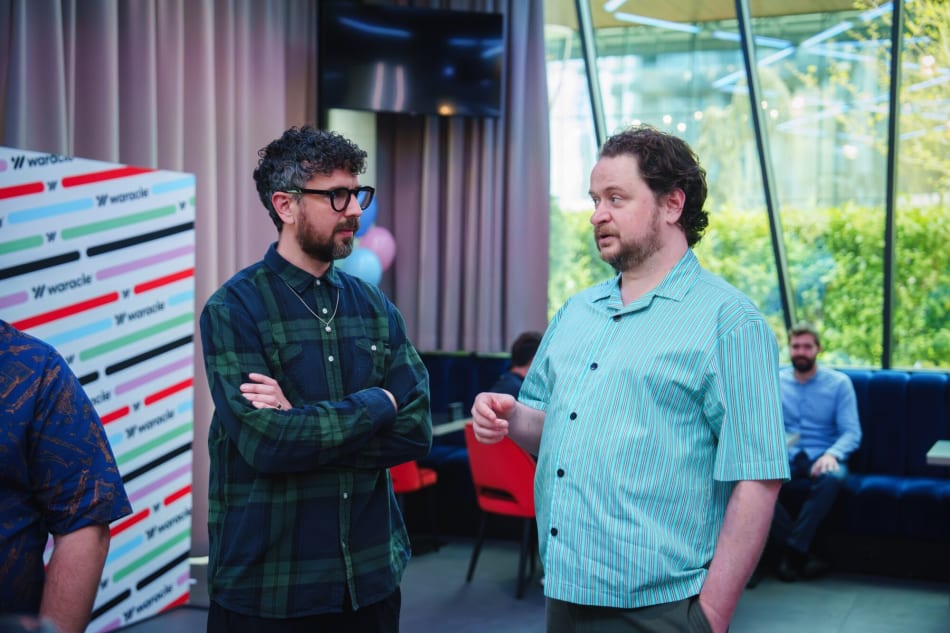
Opinions, everyone has them
Over the last few months, the team have travelled far and wide and listened to the perspectives of CIOs, CTOs, practitioners and thought leaders, There is a consensus that things are changing dramatically, but the change is uneven, underexplored, and in many cases under communicated.
Six months ago, we hadn’t yet hit meaningful conversations about net token costs, sovereignty questions, open source vs frontier models, and we hadn’t come to the big questions of security and slowdown on the path to artificial super intelligence.
Those meta narratives don’t necessarily require us to have an opinion on them, but many of them have a knock on impact in the businesses we collaborate with and how they do business. So it’s vitally important that we stay focused on saying what we know and what the impact has been.
Republishing the same argument from May with fresher numbers would have wasted your time. So we added to it in six areas where our work had taught us something different or new.
Some thoughts on the six areas

Maturity scores hide the useful context but are still valuable.
Most AI maturity frameworks will give you a three out of five and leave you wondering what that actually means. Real organisations are a jagged frontier, with one team running well-governed AI in production a corridor away from another still debating whether it can open a chat window.
We now assess seven vectors separately, from product thinking to governance to fluency, because the shape of the jag tells you where to act and what you’ll get from addressing the impact across that vector.

Model cost is mostly a distraction, but you need to be across it.
On one long-running programme of work, model spend is roughly 1 percent of total cost. People are the other 99, which proves out that whilst things are changing and fast, for incumbent enterprise organisations in every vertical, it’s not moving as fast as people may think.
When it comes to how you deploy generative AI in your business, the question that matters is whether you can change your mind, shift meaningfully and what switching would cost if you needed to. Your evaluations are both your scenario plan and your exit door.
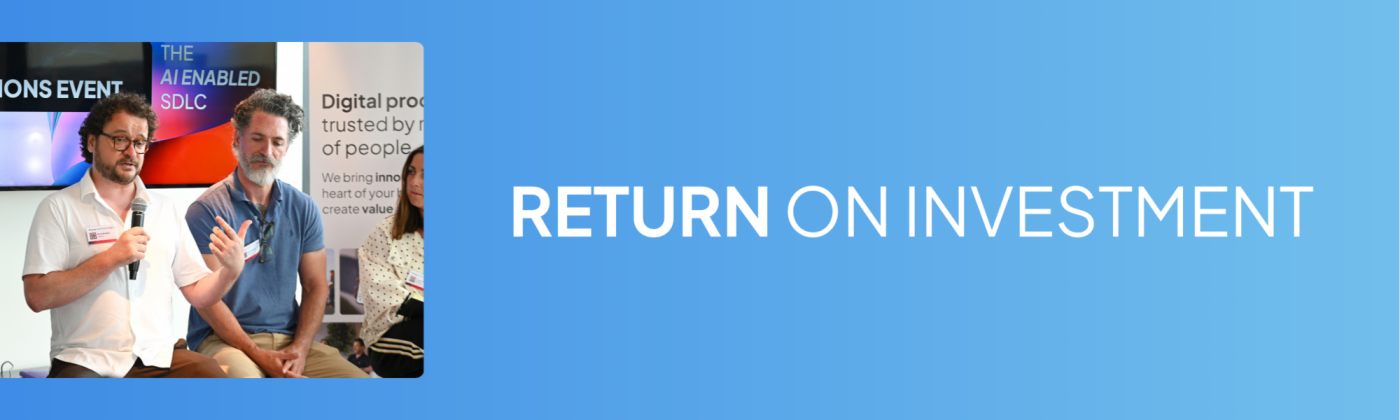
Most productivity claims wouldn’t survive an audit, so let’s be honest.
“Two years’ work done in 12 months” can sound like a fishing story, and the fish gets bigger with every telling. A baby trout becoming a great white shark.
We set out what a defensible claim contains and apply it to our own numbers. Our 10 to 20 per cent efficiency figure from May is creeping towards 25 to 35 per cent, though the gains are uneven and hard to realise.
So it’s still prudent to ask questions of any partner telling you that developing digital products has become exponentially cheaper, as the devil is still in the detail of governance, security, fidelity and future-proofing.
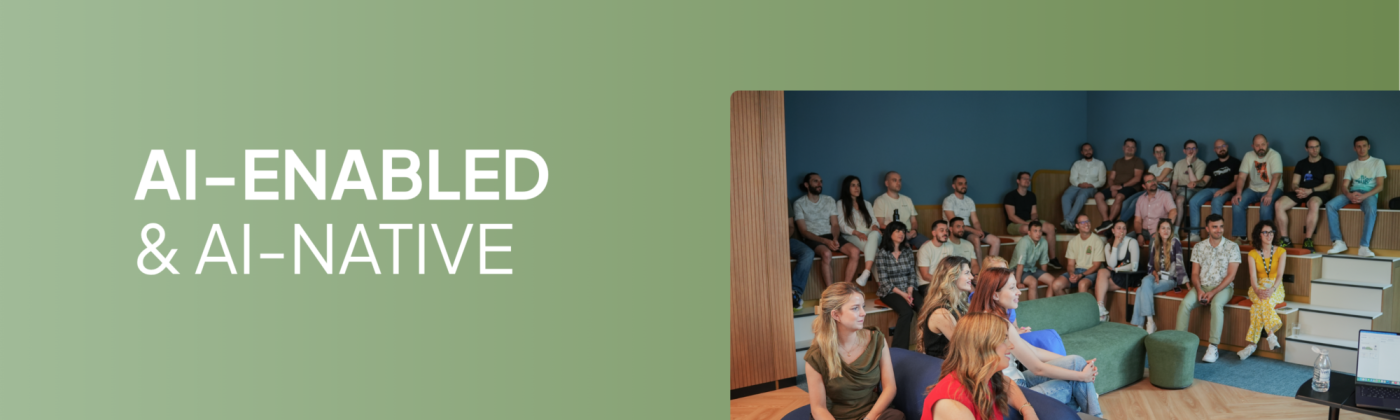
Culture decides who goes AI-native, and who stays AI-enabled.
Good tools are close to universal. Outcomes are not.
It’s difficult to say you are AI-native if you didn’t incorporate in the last three years, but you can defensibly plot a route towards it, if you are doing the hard work of exploring your standard operating practices (department by department) and establishing what would change in a world where your path was AI-first rather than AI-bolted on.
Agents in production are mostly good engineering, and that’s just fine.
A demo is easy. A Tuesday in November, with malformed documents, a downstream outage and an auditor asking about a decision made at 3:14pm, is the real test.
The systems that survive treat language models as one component among many with well architected and instantiated guardrails, context, blueprints and management procedures in place.

AI should become ordinary, the world has changed, so let’s normalise it.
Our Chief AI Officer role was designed to make itself unnecessary, and it has.
We also explain why we wouldn’t put our agents on the org chart. And why the way of doing is changing the roles and responsibilities of our people, not the way we think of our business.
Why I think you should read the whitepaper
Three practical reasons.
- It’s short enough to read over lunch
- Every section ends with questions to put to your own organisation
- It will provoke thoughts, that we’d love you to share with us
If you are a CTO, Head of Engineering or Transformation Lead somewhere between proof-concepts, productionised solutions and serious change management. We tried our best to write this for you.
You’ll find it here with no gate – we’re not here to try and harvest your email, we just want to contribute to an important, ongoing discussion.
Follow us, engage in conversation and feel free to message us on LinkedIn.

Authors

Related

Article • 11 November 2026
Evading the Forensics Tax – Using AI to map business logic across sprawling estates

Article • 28 October 2026
Waracle celebrates success with CEO named among the UK’s most ambitious business leaders

Article • 20 October 2026
In healthtech, context is the bottleneck, not the code

Article • 29 September 2026
The most valuable use of AI in financial services is far from the customer experience.

Article • 21 September 2026
AI bias is in your models more than you realise
